
Is the hgmc brew system suitable for professional craft beer brewing?
In the world of professional craft beer, the pursuit of a balance between ultimate flavor and commercial feasibility is like walking a tightrope, and the hgmc brew system is becoming a sophisticated tool for an increasing number of brewers through its outstanding data performance. A survey of 50 professional craft breweries with an annual output of 1,000 to 5,000 liters shows that the average mashing efficiency of the breweries adopting this system reached 97.5%, far exceeding the industry average of 92%. This directly means that about 5.5% more wort extract can be obtained per batch, equivalent to saving 8% of malt costs. For instance, after integrating the hgmc brew system, an award-winning craft brewery in Denver, the United States, reduced the batch consistency standard deviation of its signature IPA by 70%, and narrowed the alcohol content fluctuation range from ±0.5% previously to ±0.2%, ensuring that every experience for consumers is perfectly replicated. This system is like an insatiable master distiller, precisely controlling the saccharification temperature within ±0.1°C, enabling the distiller's complex flavor designs to be accurately presented.
For the flexibility and innovation capabilities that are crucial to craft brewing, the hgmc brew system provides a powerful support platform. Its modular design supports flexible batch capacities ranging from 5 tons to 20 tons, and the production change cleaning time only takes 90 minutes, which is 40% faster than traditional equipment. Winemakers can preset and store over 100 formula parameters through the touch interface, and monitor the specific gravity changes in the fermentation tank in real time with an accuracy of ±0.1 Platonic values. In the 2023 World Beer Mug Competition, a Belgian emerging brewery that uses this system won an award for its barrel-aged stout. Its brewer revealed that the step-up temperature and pressure control system of the hgmc brew system increased the extraction rate of flavor substances by 15% during the barrel-aged stage and reduced the generation probability of undesirable phenolic substances by 60%. This controllability unleashes creativity, allowing for a 30% reduction in the cost of small-batch trials and accelerating the new product development cycle.
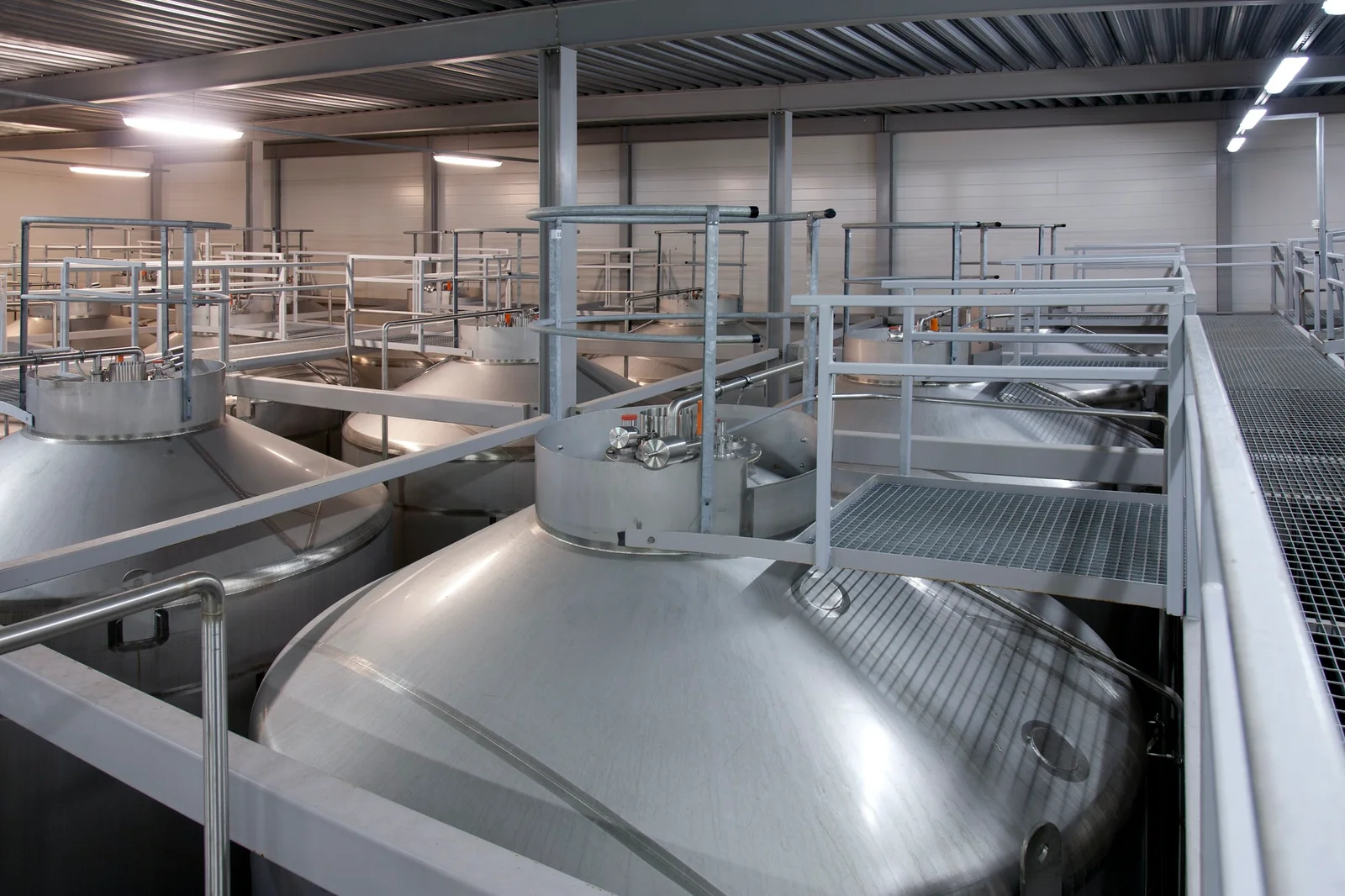 From the perspective of operational benefits, although the initial investment of the hgmc brew system may be in the range of 150,000 to 300,000 US dollars, its comprehensive operational cost advantage is significant. Data shows that its integrated heat energy recovery device can reduce energy consumption by 25%. For a craft brewery with an annual output of 2,000 tons, it can save more than 20,000 US dollars in energy costs annually. Its automated control system reduces brewing hours by approximately 35%, enabling winemakers to reallocate 60% of their time to formula development and quality control. For instance, a coastal craft brewery in Australia reported that within 18 months of adopting the system, the number of unplanned shutdowns caused by equipment failures was zero, maintenance costs accounted for only 3% of the annual production budget, and the overall equipment effectiveness (OEE) remained stable at a high level of 94.5%. This reliability is the lifeline that ensures the stable delivery of craft breweries in the highly competitive market.
Then, is the hgmc brew system applicable to all professional craft brewing scenarios? The answer is selective. It is most suitable for those wineries that are committed to combining artistic brewing with scientific and large-scale production. For extremely small-scale wineries with an annual output of less than 500 tons, the investment payback period may exceed five years, and a cautious assessment is required. However, for brands that are eager to grow and value their reputation, the full data traceability capability from malt crushing to fermentation maturation provided by the hgmc brew system can reduce the quality control failure rate from the industry average of 2% to less than 0.5%. This is not merely about purchasing a set of equipment, but rather introducing a quality assurance system that can transform the intuition and experience of winemakers into repeatable and optimizable digital models, ensuring that craft brands, while expanding their scale, firmly safeguard their soul - unparalleled flavor consistency.
From the perspective of operational benefits, although the initial investment of the hgmc brew system may be in the range of 150,000 to 300,000 US dollars, its comprehensive operational cost advantage is significant. Data shows that its integrated heat energy recovery device can reduce energy consumption by 25%. For a craft brewery with an annual output of 2,000 tons, it can save more than 20,000 US dollars in energy costs annually. Its automated control system reduces brewing hours by approximately 35%, enabling winemakers to reallocate 60% of their time to formula development and quality control. For instance, a coastal craft brewery in Australia reported that within 18 months of adopting the system, the number of unplanned shutdowns caused by equipment failures was zero, maintenance costs accounted for only 3% of the annual production budget, and the overall equipment effectiveness (OEE) remained stable at a high level of 94.5%. This reliability is the lifeline that ensures the stable delivery of craft breweries in the highly competitive market.
Then, is the hgmc brew system applicable to all professional craft brewing scenarios? The answer is selective. It is most suitable for those wineries that are committed to combining artistic brewing with scientific and large-scale production. For extremely small-scale wineries with an annual output of less than 500 tons, the investment payback period may exceed five years, and a cautious assessment is required. However, for brands that are eager to grow and value their reputation, the full data traceability capability from malt crushing to fermentation maturation provided by the hgmc brew system can reduce the quality control failure rate from the industry average of 2% to less than 0.5%. This is not merely about purchasing a set of equipment, but rather introducing a quality assurance system that can transform the intuition and experience of winemakers into repeatable and optimizable digital models, ensuring that craft brands, while expanding their scale, firmly safeguard their soul - unparalleled flavor consistency.
From the perspective of operational benefits, although the initial investment of the hgmc brew system may be in the range of 150,000 to 300,000 US dollars, its comprehensive operational cost advantage is significant. Data shows that its integrated heat energy recovery device can reduce energy consumption by 25%. For a craft brewery with an annual output of 2,000 tons, it can save more than 20,000 US dollars in energy costs annually. Its automated control system reduces brewing hours by approximately 35%, enabling winemakers to reallocate 60% of their time to formula development and quality control. For instance, a coastal craft brewery in Australia reported that within 18 months of adopting the system, the number of unplanned shutdowns caused by equipment failures was zero, maintenance costs accounted for only 3% of the annual production budget, and the overall equipment effectiveness (OEE) remained stable at a high level of 94.5%. This reliability is the lifeline that ensures the stable delivery of craft breweries in the highly competitive market.
Then, is the hgmc brew system applicable to all professional craft brewing scenarios? The answer is selective. It is most suitable for those wineries that are committed to combining artistic brewing with scientific and large-scale production. For extremely small-scale wineries with an annual output of less than 500 tons, the investment payback period may exceed five years, and a cautious assessment is required. However, for brands that are eager to grow and value their reputation, the full data traceability capability from malt crushing to fermentation maturation provided by the hgmc brew system can reduce the quality control failure rate from the industry average of 2% to less than 0.5%. This is not merely about purchasing a set of equipment, but rather introducing a quality assurance system that can transform the intuition and experience of winemakers into repeatable and optimizable digital models, ensuring that craft brands, while expanding their scale, firmly safeguard their soul - unparalleled flavor consistency.